
Not all injury is the same.
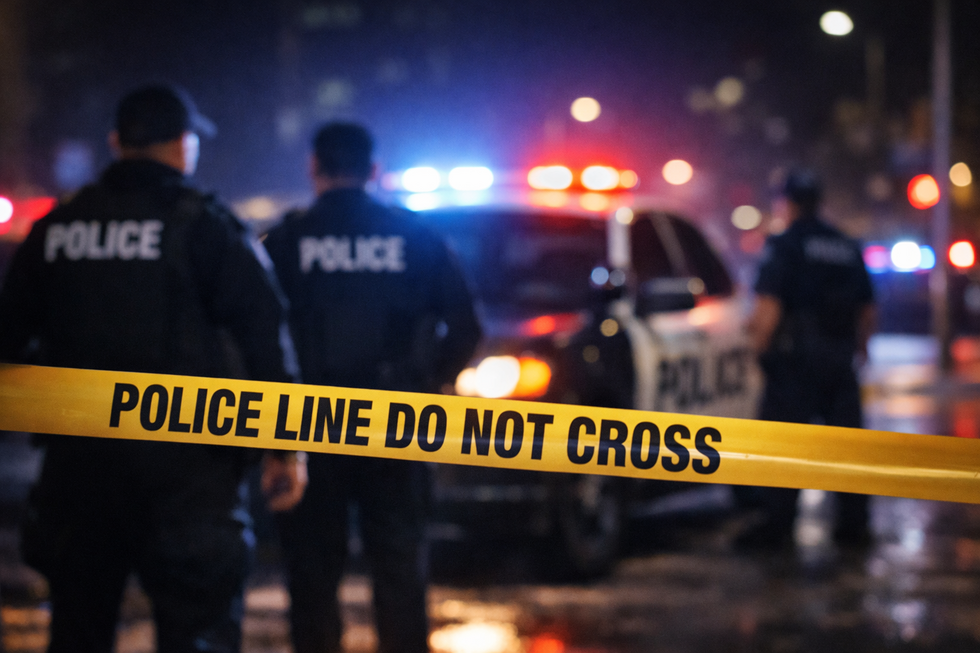
In the world of tort law, most lawyers handle cases involving mistakes—drivers misjudge distance, businesses fail to fix hazards, professionals cut corners. These cases turn on familiar concepts: duty, breach, causation, damages. The question is what a reasonable person should have done to avoid the harm that occurred.
Civil rights litigation operates in an entirely different universe. Here, the defendant is often not a distracted driver or a negligent store manager, but the government itself. The injury is not merely physical; it is constitutional. The standard is not ordinary negligence, but whether an officer's conduct violated clearly established federal law from the vantage point of a reasonable officer facing rapidly evolving circumstances. The doctrines are not borrowed from common law, but constructed through Supreme Court jurisprudence over decades of institutional hesitation about exposing government actors to liability.
Where negligence lawyers fight about damages, civil rights lawyers often fight about whether the case may proceed at all. The doctrines are not merely defenses; they are thresholds. The procedural posture is not about valuing harm, but about determining whether there is a remedy for harm in the first place. And unlike ordinary tort defendants, municipalities benefit from doctrines specifically designed to narrow, delay, or extinguish constitutional claims before a jury is ever seated.
Few lawyers enter this arena. Fewer still remain.
WHAT NEGLIGENCE LAWYERS ALREADY KNOW
In negligence litigation, the operative question is straightforward:
What should a reasonable person have done to avoid causing this injury?
The elements are stable:
- duty
- breach
- causation
- damages
Juries are comfortable with these concepts because they track daily life. The law asks how a reasonably careful person would behave under similar circumstances. The inquiry is backward-looking, drawing upon hindsight to evaluate mistakes and assign responsibility. Negligence admits error and compensates harm. There is no constitutional dimension to the analysis.
This is not a critique of negligence work; it is foundational to civil justice. But it is crucial to understand how limited negligence doctrine is as a conceptual preparation for constitutional litigation. The difference is not merely one of degree, but of kind.
THE CONSTITUTIONAL ARENA: WHERE THE STATE IS THE DEFENDANT
Civil rights litigation under 42 U.S.C. § 1983 is fundamentally different because it enforces federal constitutional rights against government actors. The defendant is not a private tortfeasor but a state actor wielding sovereign authority. Liability arises not from mistake, but from violation—specifically, violation of rights secured by the Constitution or federal law.
This immediately imposes a higher threshold. Not every bad decision by an officer is actionable. Not every injury inflicted by the government is unconstitutional. And the doctrines that determine which cases proceed were not written to be plaintiff-friendly.
Civil rights litigation is a field designed by courts, not legislatures. Every serious litigator operating in this space must therefore master appellate jurisprudence, not just jury persuasion. The arena is built from Supreme Court holdings, qualified immunity decisions, Monell limitations, video jurisprudence, and procedural doctrines that have no analog in ordinary negligence.
The most consequential of these doctrines in modern policing cases begins with Graham v. Connor.
GRAHAM: THE SPLIT-SECOND DOCTRINE
In ordinary negligence, the law asks whether an actor failed to exercise reasonable care. In use-of-force civil rights cases, the Supreme Court does not allow hindsight. Instead, the inquiry is whether the force used was “objectively reasonable in light of the facts and circumstances confronting the officer” without the benefit of “20/20 vision of hindsight.”
This formulation, originating in Graham v. Connor (1989), is the doctrinal axis around which most police use-of-force cases now turn. It is not merely a standard; it is a perspective shift. The jury must evaluate reasonableness from the viewpoint of a reasonable officer on the scene, in circumstances that are tense, uncertain, and rapidly evolving.
Graham introduced a set of factors that have since become the field's basic vocabulary:
- the severity of the crime at issue
- whether the suspect poses an immediate threat to the safety of officers or others
- whether the suspect is actively resisting arrest or attempting to evade arrest by flight
To negligence lawyers, these look like elements. They are not. They are filters. They frame the inquiry, but they do not define liability. Courts are free to weigh them unevenly and add context-dependent considerations. This doctrine has been elaborated for over three decades by federal appellate courts, producing regional variations in how threats, evasion, compliance, and proportionality are assessed.
DEADLY FORCE: TENNESSEE v. GARNER AND THE LIMITS OF THE STATE
For deadly force, the pivotal case is Tennessee v. Garner (1985), which held that the Constitution prohibits law enforcement from using deadly force against a fleeing suspect unless the suspect poses a significant threat of death or serious physical injury to the officer or others.
This case carved the boundary between permissible seizure and unconstitutional killing. But it also created the doctrinal tension that later qualified immunity cases exploited: Garner restricts deadly force, while Graham constructs the perspective through which deadly force is later justified.
Many negligence lawyers assume the question in police shootings is whether the shooting was a mistake. In constitutional litigation, that question is almost irrelevant. The central questions are:
- Did the officer reasonably believe there was an imminent threat?
- Was the threat significant enough to justify deadly force?
- Was the belief reasonable under tense, rapidly evolving circumstances?
- Did the circumstances allow for less intrusive alternatives, or did they unfold too quickly to require them?
These are questions about perception, temporality, and risk, not merely about harm.
THE VIDEO REVOLUTION: SCOTT v. HARRIS AND THE FRAME-BY-FRAME ERA
The arrival of dashcam, bodycam, and bystander video did not merely add evidence; it altered doctrine. The watershed moment came in Scott v. Harris (2007), where the Supreme Court held that when video evidence “blatantly contradicts” a plaintiff's version of events, courts may reject the plaintiff's narrative at summary judgment without submitting the case to a jury.
This decision effectively allowed video to override live testimony in § 1983 cases. The ruling shifted use-of-force litigation into what might be called constitutional forensics—a frame-by-frame reconstruction of threat perception and officer decision-making.
Post-Scott, courts routinely:
✔ freeze frames
✔ analyze distances
✔ measure angles
✔ time intervals
✔ threat velocity
✔ weapon orientation
✔ officer positioning
and evaluate whether the officer faced a split-second threat justifying force.
This is not negligence. This is not even traditional tort. This is a video-mediated constitutional reconstruction of state violence, conducted under a doctrine that systematically privileges the officer's perspective and splits seconds into litigable units.
QUALIFIED IMMUNITY: THE GATEKEEPER DOCTRINE
In negligence cases, the defense does not typically dispute whether the plaintiff has the right to sue. In constitutional torts, that is often the central dispute. The doctrine responsible for this shift is qualified immunity, which shields officers from liability unless they violate rights that were “clearly established” at the time of the incident.
This requirement does not merely ask whether the conduct was unreasonable. It asks whether a prior case in the same jurisdiction had previously addressed a sufficiently similar scenario such that every reasonable officer would have known the conduct was unconstitutional.
This is an extraordinarily high bar. The Supreme Court has repeatedly warned that clearly established law may not be defined at a “high level of generality.” Instead, the facts must be particularized. Cases such as Mullenix v. Luna, Kisela v. Hughes, Rivas-Villegas v. Cortesluna, and others have emphasized that overly broad formulations—such as “you cannot shoot an unarmed person”—are insufficient to defeat immunity.
In practice, this means plaintiffs must locate a prior case involving:
- similar threat profile
- similar level of flight or resistance
- similar temporal constraints
- similar environment (street, vehicle, interior structure, etc.)
- similar officer tactics
- similar weapon dynamics
Negligence lawyers often assume that once unreasonable conduct is shown, liability follows. In civil rights cases, unreasonable conduct may be acknowledged and yet no remedy exists because no prior case involved an analogous configuration of facts.
Qualified immunity thus performs a function no negligence doctrine ever attempted: it abolishes remedies for constitutional violations lacking sufficient historical precedent, even when the violation is obvious.
“CLEARLY ESTABLISHED” AND THE ANTI-HINDSIGHT BARRIER
To outsiders, qualified immunity can appear as a simple defense. In reality, it is a gatekeeping architecture. It is invoked at the earliest stages—often in Rule 12(b)(6) motions to dismiss, or at summary judgment—long before a jury evaluates the reasonableness of the force.
The defense is entitled to raise qualified immunity interlocutorily. This means that if the district court denies immunity, the defendant may appeal immediately, halting the litigation and imposing significant delay. No negligence case affords such procedural advantage.
Moreover, because qualified immunity bars suit against individual officers, plaintiffs frequently face a second layer of insulation—municipal immunity under Monell.
MONELL: WHY CITIES DON'T FEAR NEGLIGENCE LAWYERS
Cities and counties are not liable under § 1983 simply because their employees violated someone's rights. There is no respondeat superior liability. Instead, a plaintiff must show that the municipality maintained a:
- policy
- custom
- practice
- failure to train
- failure to supervise
- or decision by a final policymaker
that was the moving force behind the constitutional injury.
This is not an evidentiary burden; it is a conceptual hurdle. Municipal liability requires plaintiffs to prove institutional causation, not individual fault. Civil rights litigators therefore must understand not only the moment of force, but the ecosystem that produced it—training protocols, discipline structures, use-of-force reports, internal affairs data, bodycam audits, and policy memoranda.
None of these concepts exist in ordinary negligence. No store owner invokes a “failure to train” doctrine to defeat liability for a slip-and-fall.
Municipalities also weaponize scale. When plaintiffs seek training records, policy manuals, disciplinary histories, or complaint databases, municipalities frequently assert exemptions based on privilege, security, or administrative burden. These discovery battles are not peripheral. They are the beating heart of Monell.
It is not uncommon for Monell claims to proceed while the underlying individual claims have been stripped away by qualified immunity. The civil rights litigator must therefore prove a policy violation without an individual violation, a paradox that would feel absurd in negligence litigation but is routine in this field.
THE PROCEDURAL GAUNTLET
From the moment a civil rights case is filed, the plaintiff navigates a sequence of procedural chokepoints unknown to ordinary tort practice:
1. Motion to Dismiss (Rule 12(b)(6))
The complaint must allege violation of a clearly established right with factual specificity. Boilerplate is fatal.
2. Qualified Immunity at Summary Judgment
Defendants argue no constitutional violation or no clearly established analog. Video evidence is dissected. Depositions are parsed for split-second decisions.
3. Interlocutory Appeal
If immunity is denied, the case is paused while the appellate court reviews the denial. Months or years may pass before the case returns to the district court.
4. Monell on a Parallel Track
Discovery battles, expert reports, and motion practice proceed on institutional causation, often after the individual officer has exited the case.
5. Trial (If Ever Reached)
Jury instructions must map constitutional language, not merely common-sense negligence. The risk profile is high, the case law dense, and municipal defense counsel well-funded.
In negligence litigation, trial is the destination. In civil rights litigation, trial is the exception.
WHY MOST NEGLIGENCE LAWYERS DON'T ENTER THIS FIELD
None of this is a critique of negligence practitioners. It is a recognition of different incentives.
Negligence lawyers reasonably avoid civil rights cases because:
- success rates are lower
- procedural barriers are higher
- municipal defendants never negotiate early
- immunity distortions create unpredictable outcomes
- interlocutory appeals destroy timelines
- verdict volatility is extreme
- fee recovery is uncertain
- and damages are often capped or contested
It is economically rational for most firms to decline these cases. They are uphill battles with high burn rates.
But if every lawyer makes the economically rational choice, constitutional rights become unenforceable as a practical matter. A right without a remedy is indistinguishable from no right at all.
Civil rights litigation is not merely about compensation. It is about constitutional accountability. It is about forcing into the light conduct that the Constitution restrains for the protection of the public. It is about the recognition that unchecked power metastasizes.
Where negligence litigation seeks to correct private mistakes, civil rights litigation seeks to check public force. The stakes are institutional and systemic. When the State kills, injures, or degrades, it does so with the authority of law. Only law can answer.
The doctrines that deter lawyers from entering this field—qualified immunity, Monell, interlocutory appeals, video forensics—are precisely the doctrines that make the work necessary. A democratic society cannot rely solely on internal affairs divisions, municipal risk pools, or political pressure to regulate force. The courthouse remains the one forum where the State must explain itself.
THE STAKES OF SILENCE
If negligence lawyers do not cross the boundary into constitutional litigation, municipalities face no meaningful litigation risk for constitutional violations. Training does not improve. Use-of-force policies do not evolve. Rights exist as slogans rather than instruments.
When cities discover that no one sues them, they do not interpret this as evidence of constitutional compliance. They interpret it as freedom.
Civil rights litigation reminds the State that power is not self-justifying. It is accountable. And it is accountable not merely in theory, but in law.
CLOSING
Civil rights litigation is not for everyone. It punishes inexperience, rewards patience, and requires literacy in doctrines foreign to most tort practice. It is slow, technical, expensive, and often thankless.
DEDICATION
For those who refuse to let constitutional rights die quietly.

Comments
There are no comments for this post. Be the first and Add your Comment below.
Leave a Comment